Game · Interactive Installation
Pixel Patrol
A multiscreen installation about content moderation in the digital age
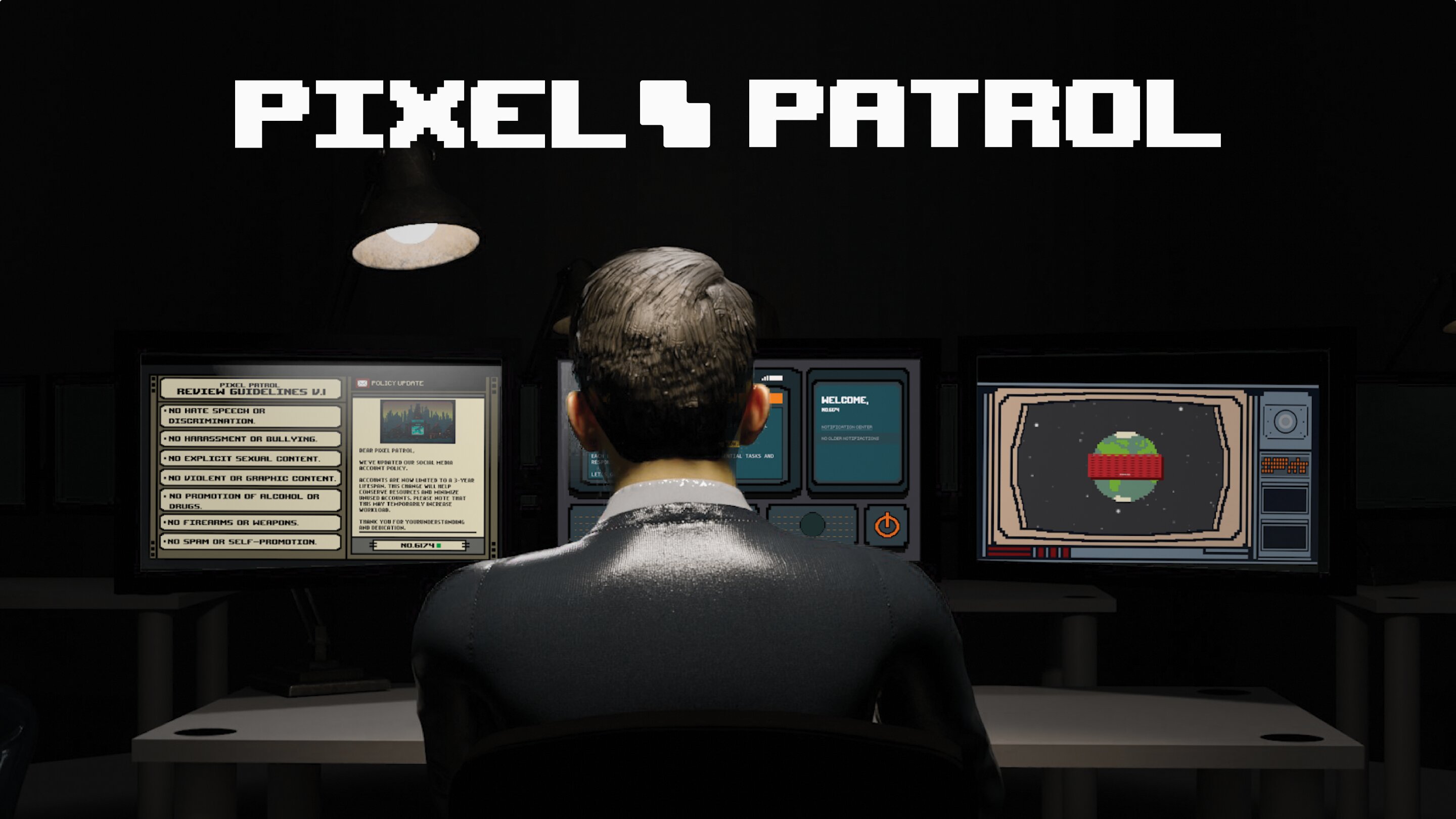
Visitors step into the shoes of content moderators, navigating the balance between individual expression and platform rules in a dystopian world.
- Timeline
- 2023
- Tools
- TouchDesigner, MidJourney, Runway, After Effects, Laser Cutting
- Role
- Concept, Game Design, Visual Design, Fabrication
- Team
- Lifei Wang · Advisor: Juliette Powell
- Skills
- Interactive Installation, Game Design, GenAI Imagery, Physical Fabrication
Context
You sit in the moderator's seat, and the guidelines keep shifting under you.
Pixel Patrol is an interactive installation about content moderation: the ethical tension and power dynamics between individual users and the platforms that govern them. Drawing on games like Papers, Please and Do Not Feed the Monkeys, visitors approve and remove content in a dystopian world.
The game
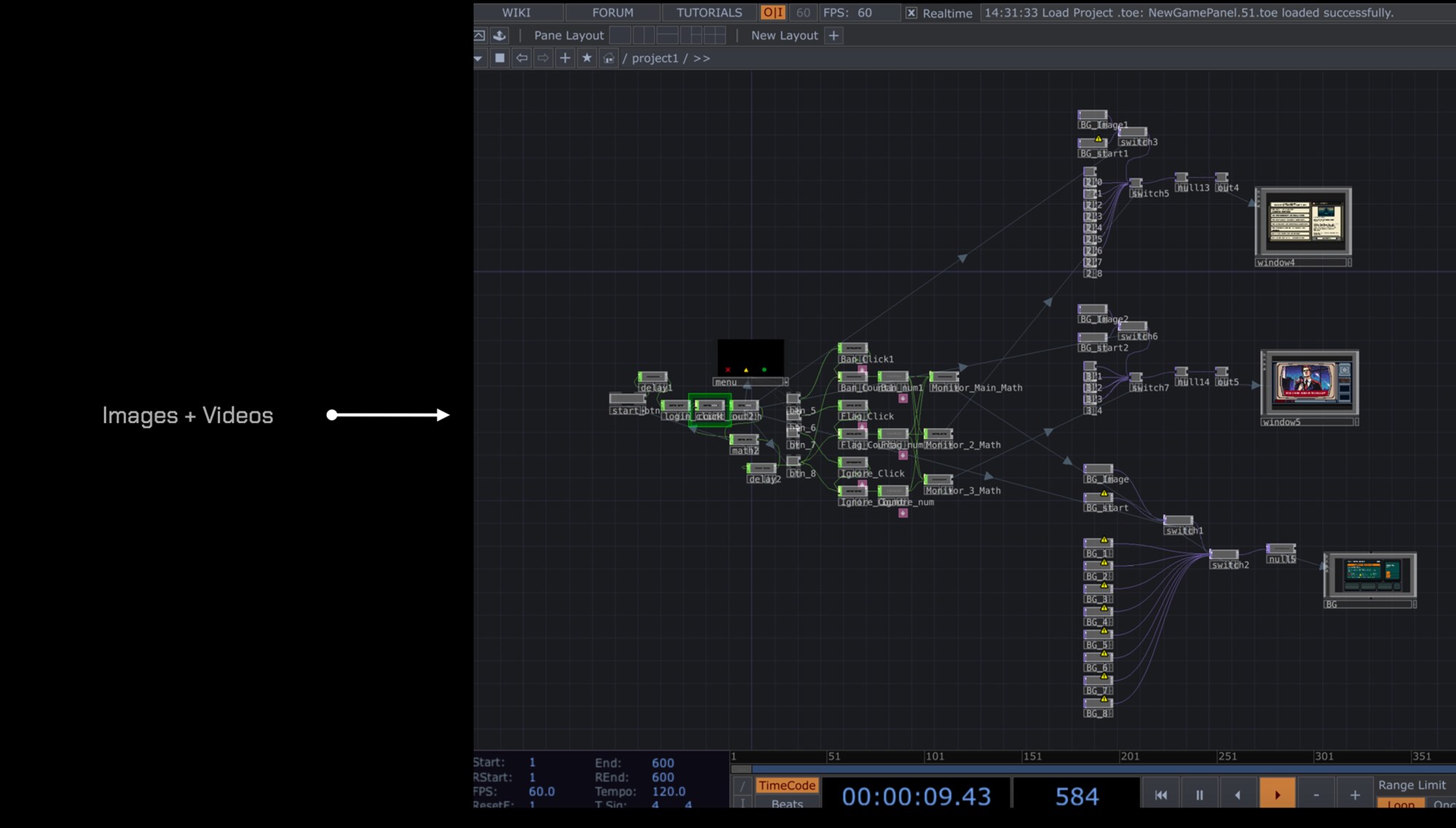
The loop runs across three monitors driven by TouchDesigner: content arrives, guidelines evolve, real-time news bleeds in, and every approve-or-remove call has consequences that ripple through a virtual society.
From screen to room
Moderating in public raises a question a browser never would: who else can see what you're deciding on?
I originally imagined this as an online game simulating three screens on one display. Turning it into a physical installation made that question real.
My answer was a pair of polarizing filters. The moderation screen looks blank to anyone standing nearby, and only the player, looking through a matching polarizing viewfinder, can see the content to judge. The privacy of the decision becomes physical, and the act of moderation turns into an embodied, deliberate job instead of a screen exercise.
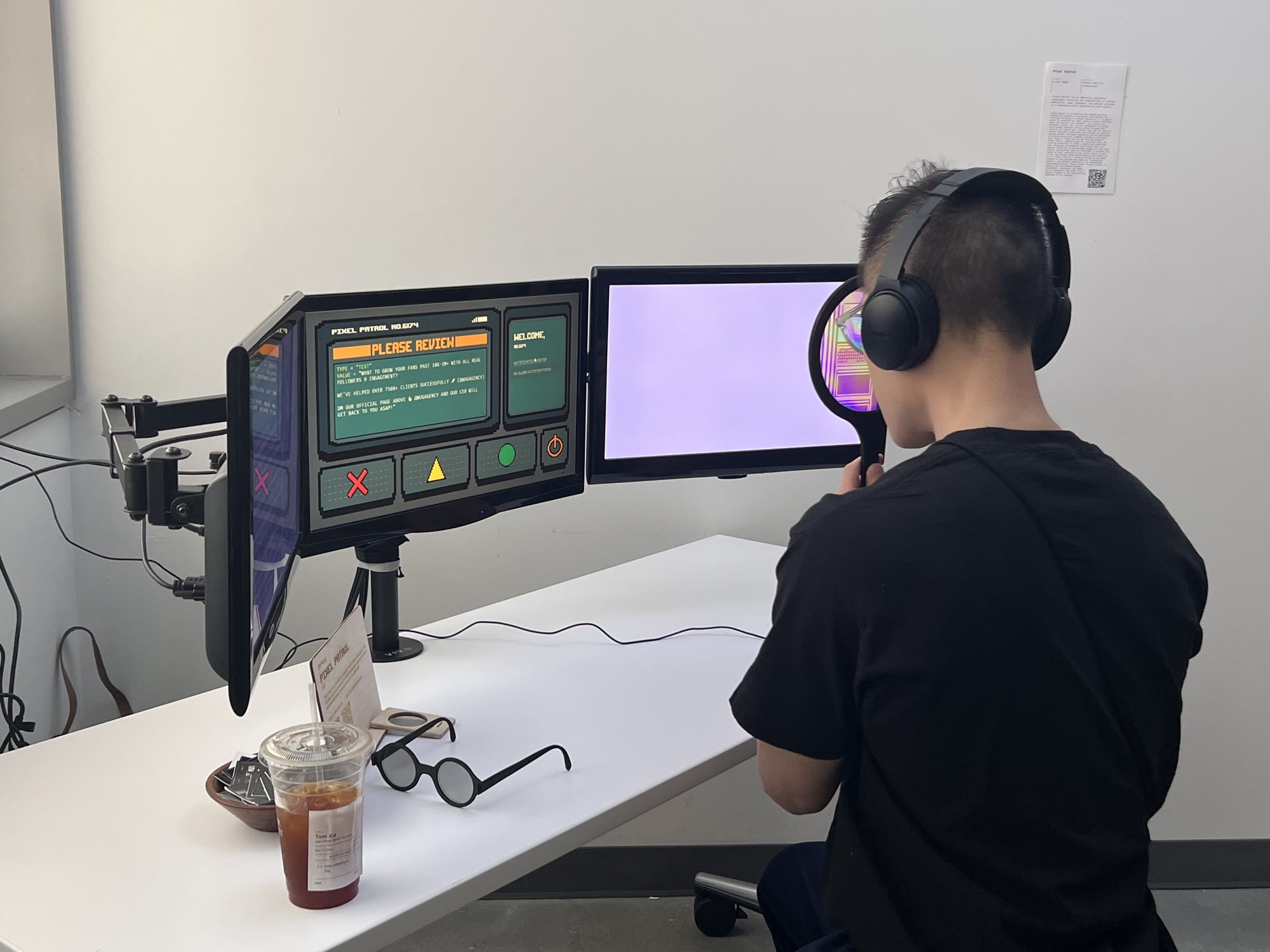
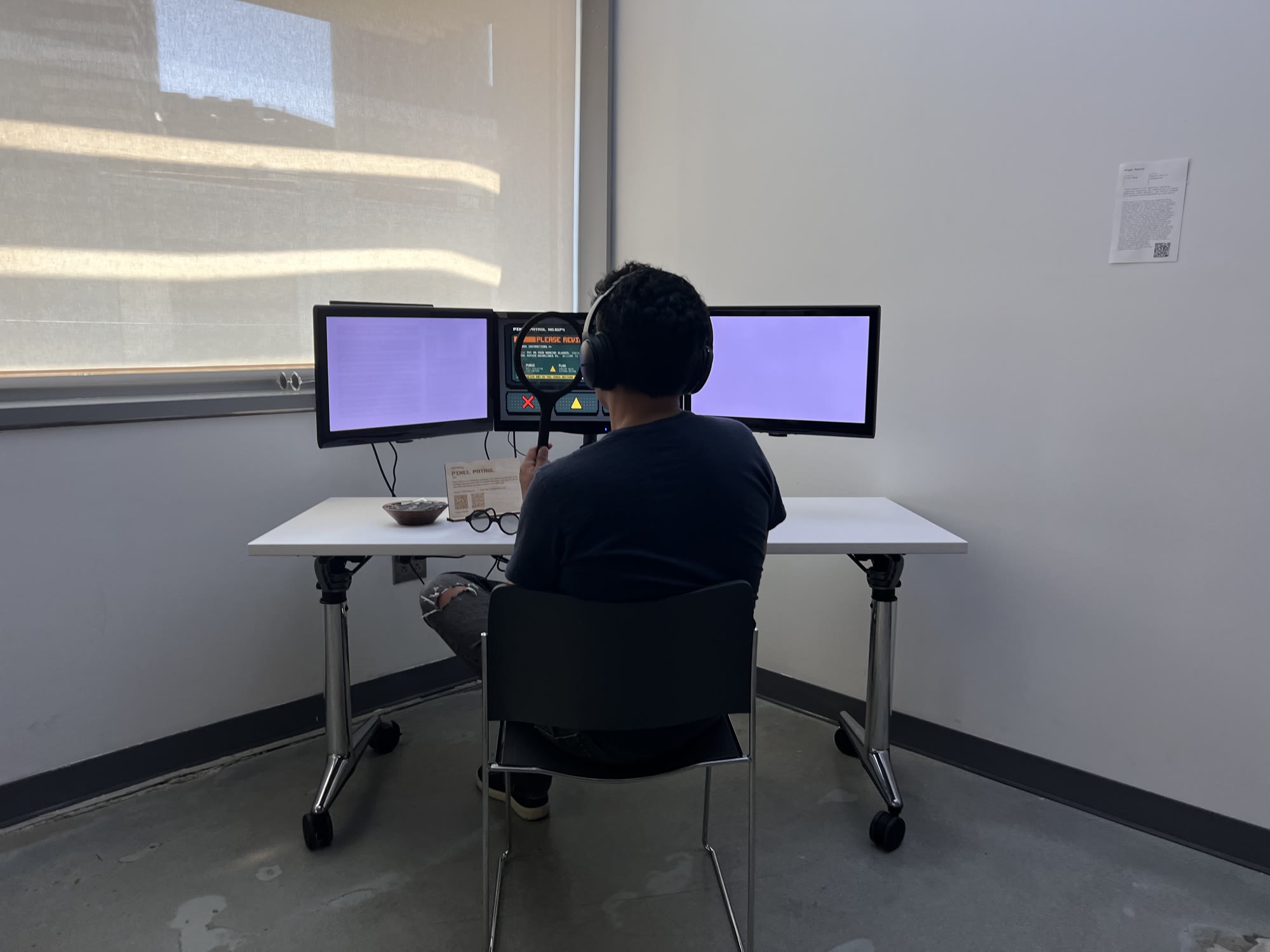
Making it
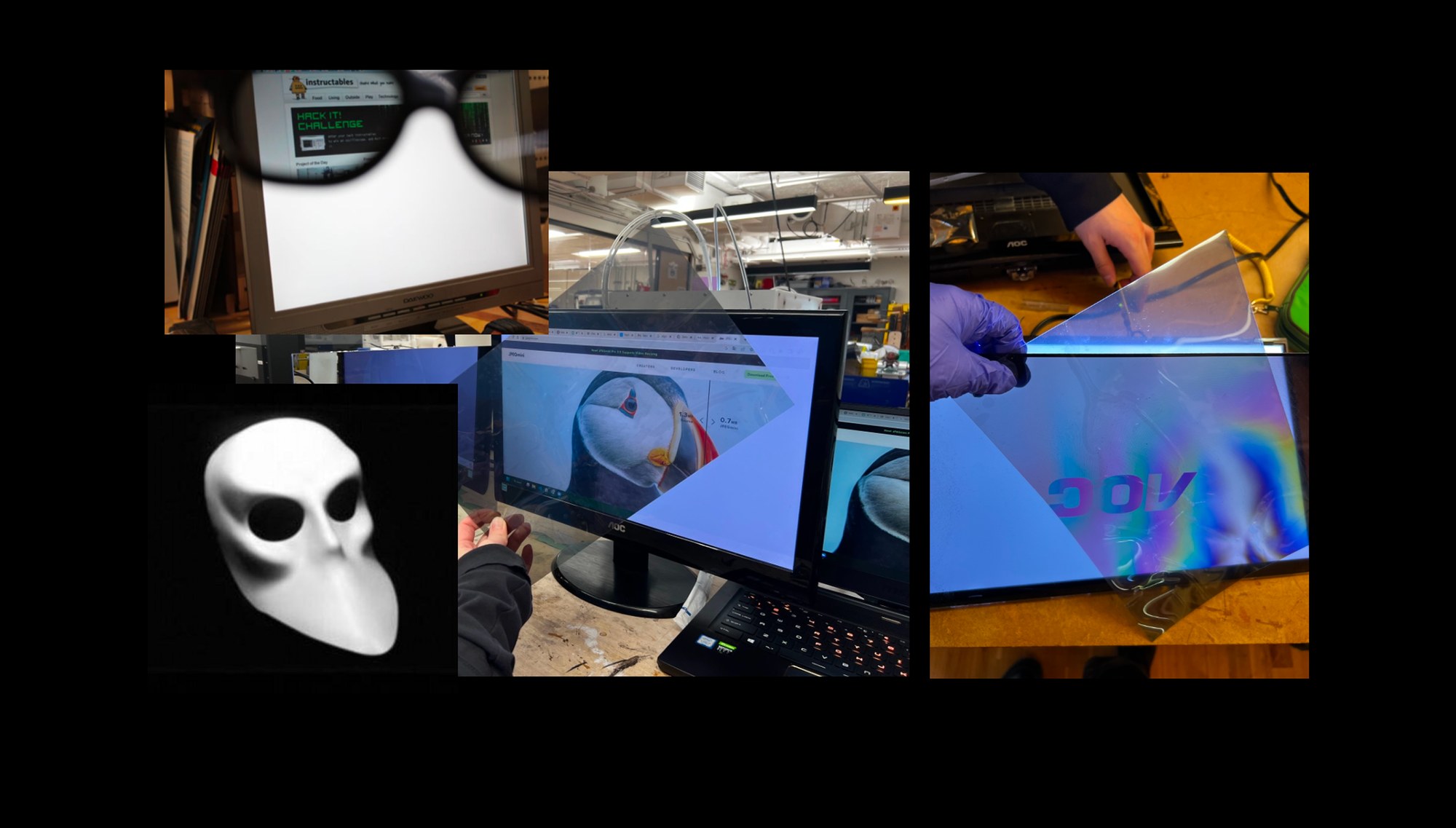
The screens and viewfinder were fabricated with laser-cut parts and polarizing film, and the whole system ran in real time through a TouchDesigner engine wiring the three monitors together.
Exhibitions
Dutch Design Week 2025 — Eindhoven, part of the RE/CRAFT group exhibition
NYU Tisch Show 2023 — New York