Game · Visual Novel
DataVille
A visual novel about the invisible labor behind AI
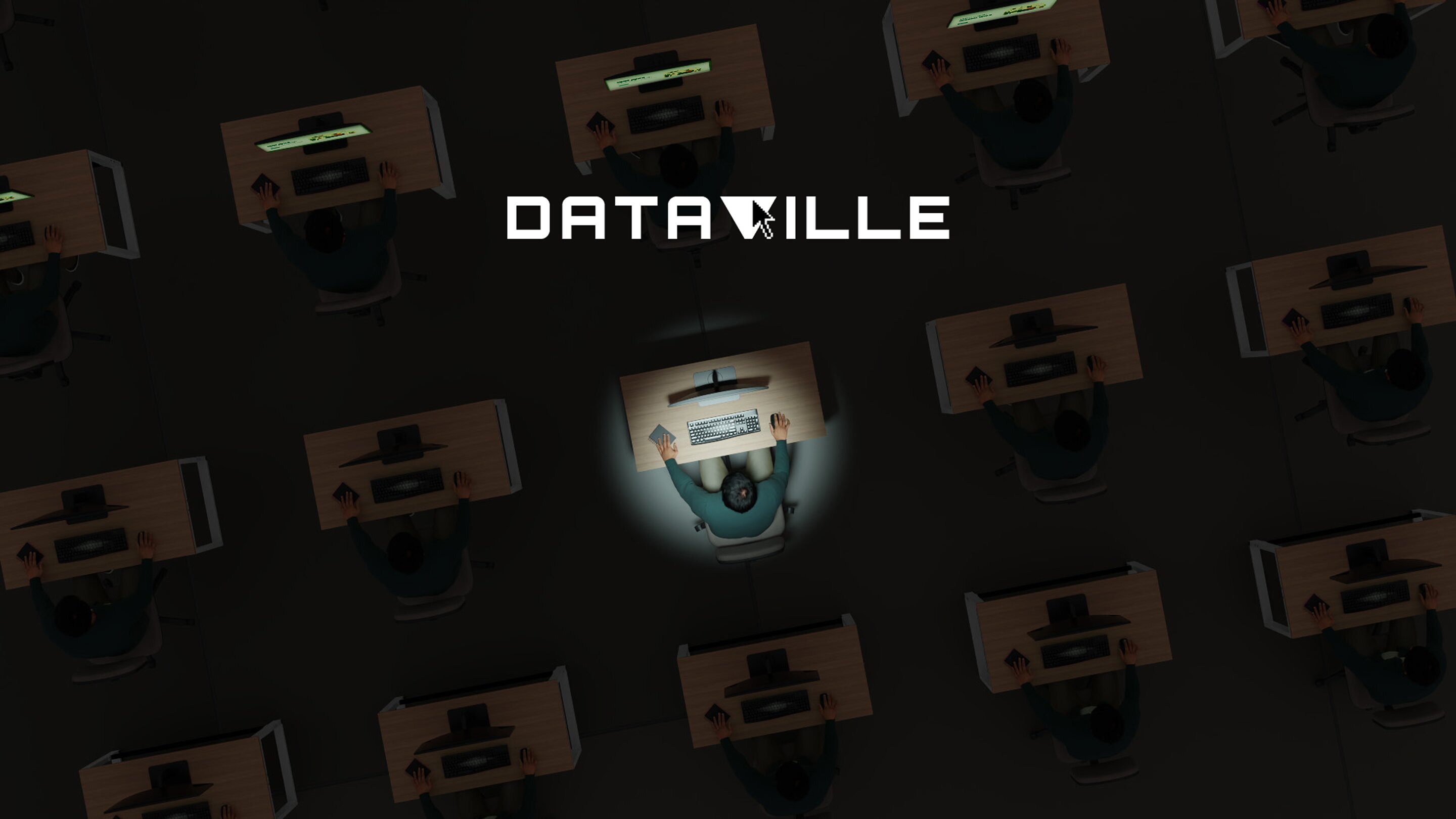
The people who label training data can shape what a model does as much as the scientists who design it, yet they are invisible to the public. DataVille puts you in their shoes.
Experience the game live- Timeline
- 2023
- Tools
- Blender, ComfyUI, Stable Diffusion + LoRA, Ren'Py
- Role
- Art Direction: all visual design and in-game visual content
- Team
- Brent Bailey, Arnab Chakravarty, Henry Baum, Lifei Wang, Ian McNeely
- Skills
- Art Direction, 3D Modeling & Rendering, GenAI Pipeline Design
Context
The choices you make train the AI, and the AI reshapes the world.
DataVille is a visual novel set in a dystopian present where large companies rely on the unseen, underpaid labor of gig workers to train massive AI models. As the world faces a refugee crisis from outer space, you play a newly hired data labeler at a company selling facial recognition software used on the new arrivals. Development was supported by a Mozilla Creative Media Award, one of 11 projects on AI and responsible design selected by the Mozilla Foundation in 2023.
Getting hired
There are many forking paths to travel, but first: you have to make rent.
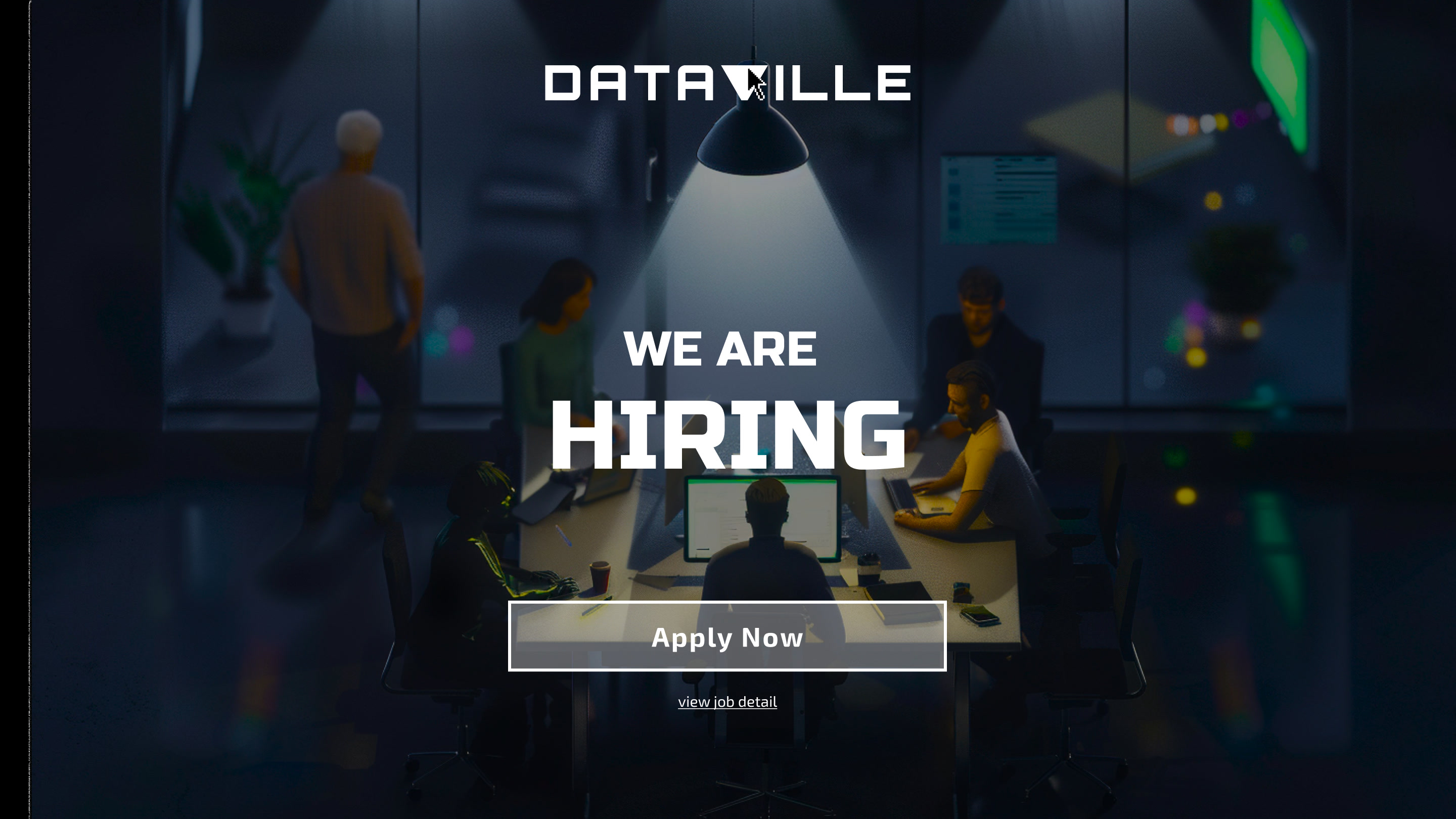
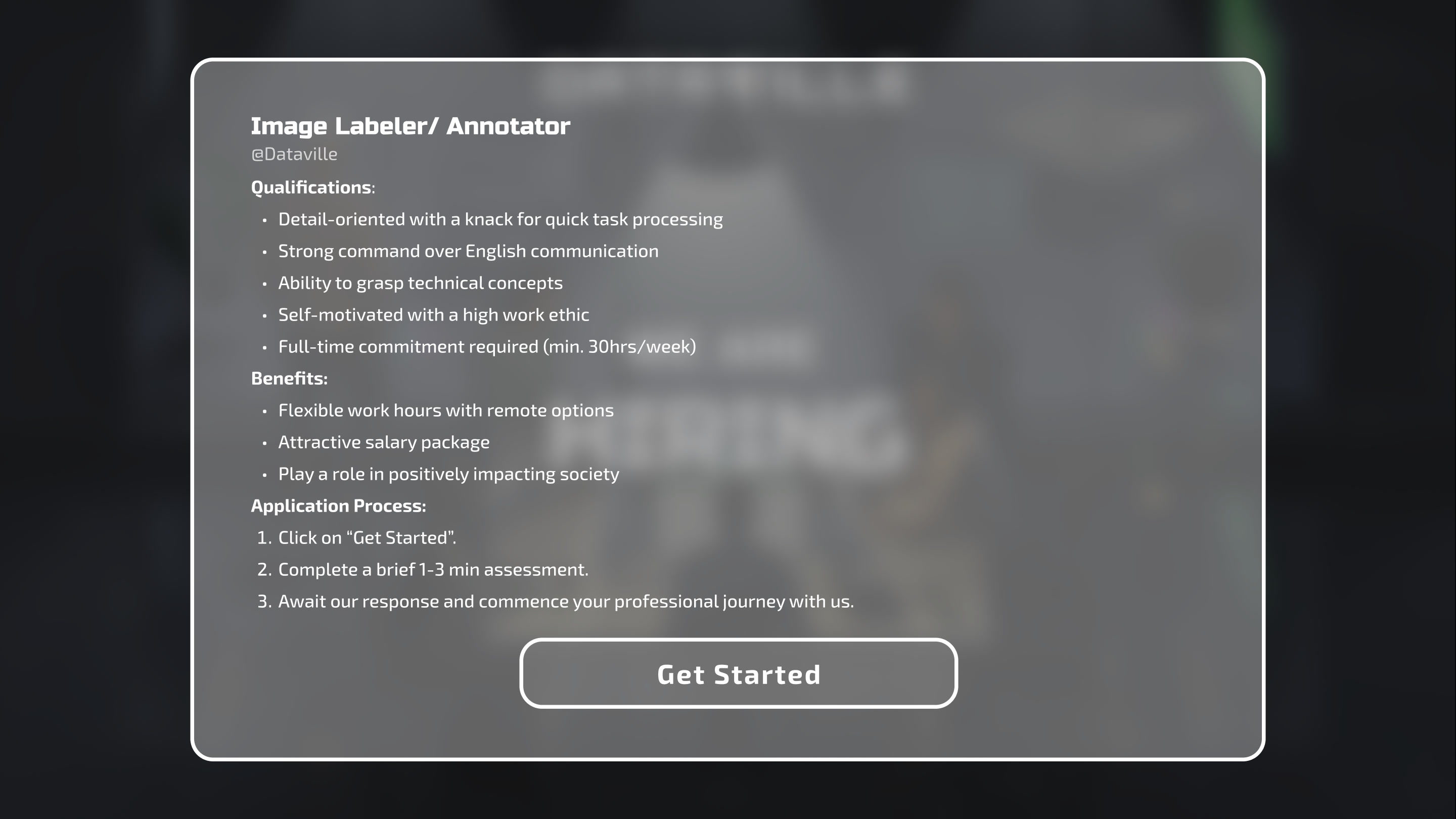
The game opens the way the gig economy does, with a friendly job listing. Flexible hours, attractive salary, a chance to positively impact society. All you have to do is click Get Started.
Building the world
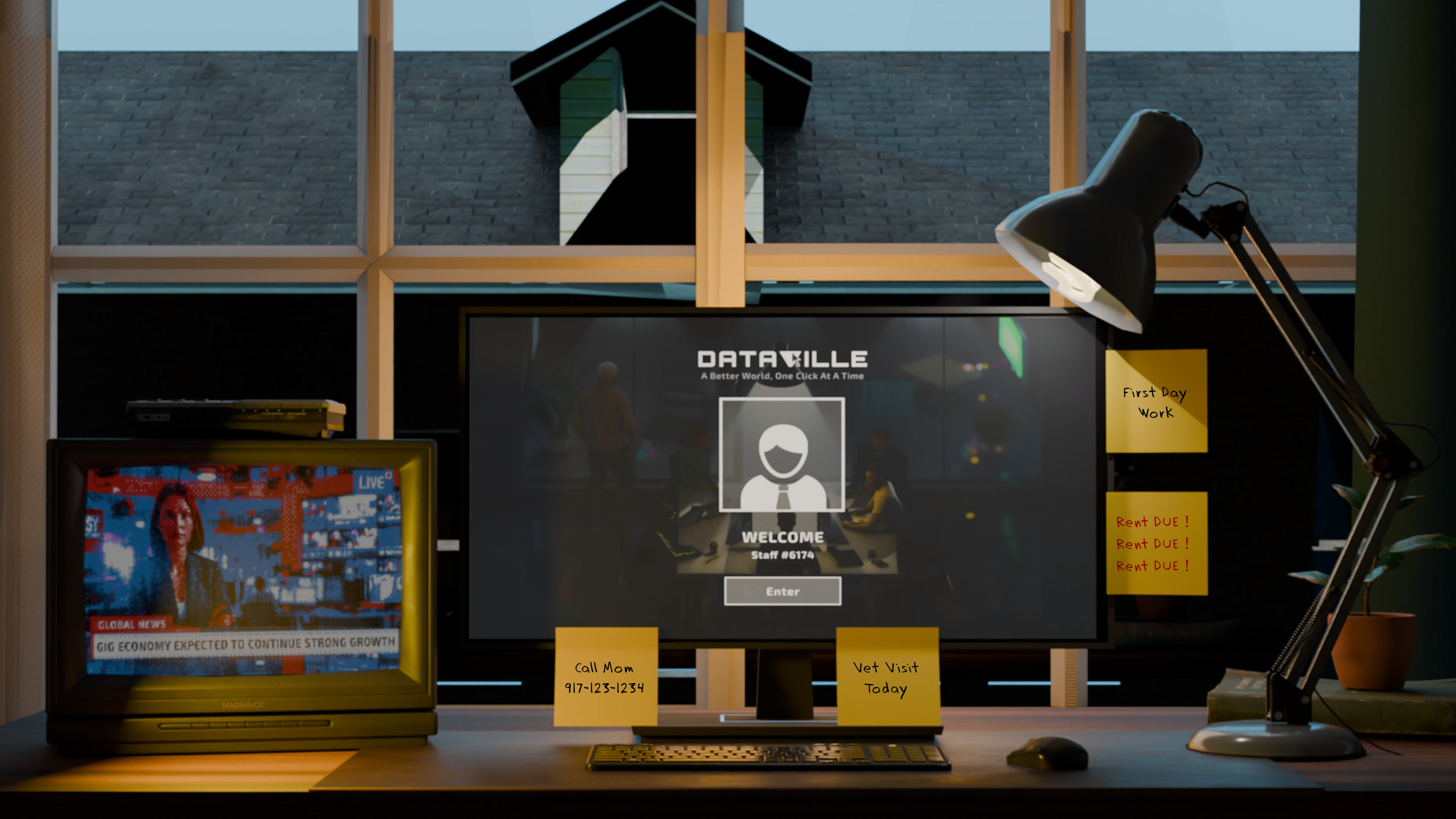
The whole game lives in one room I modeled and rendered in Blender, and the room answers your choices.
I led the art direction: all of the game's visual design and in-game visual content, from the world the player lives in to the interfaces they work on, held together in one coherent visual language. The story was written by Ian McNeely.
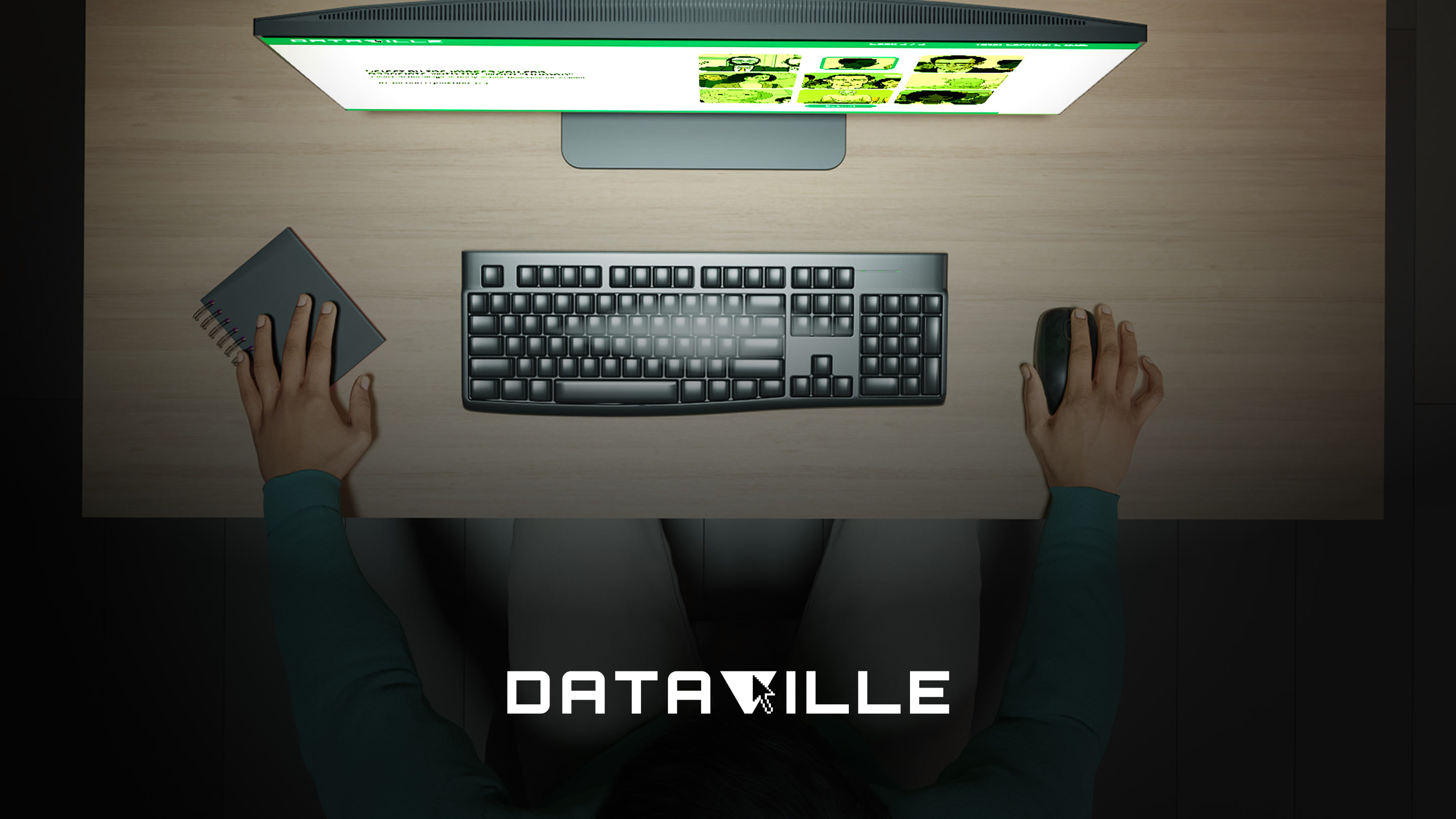
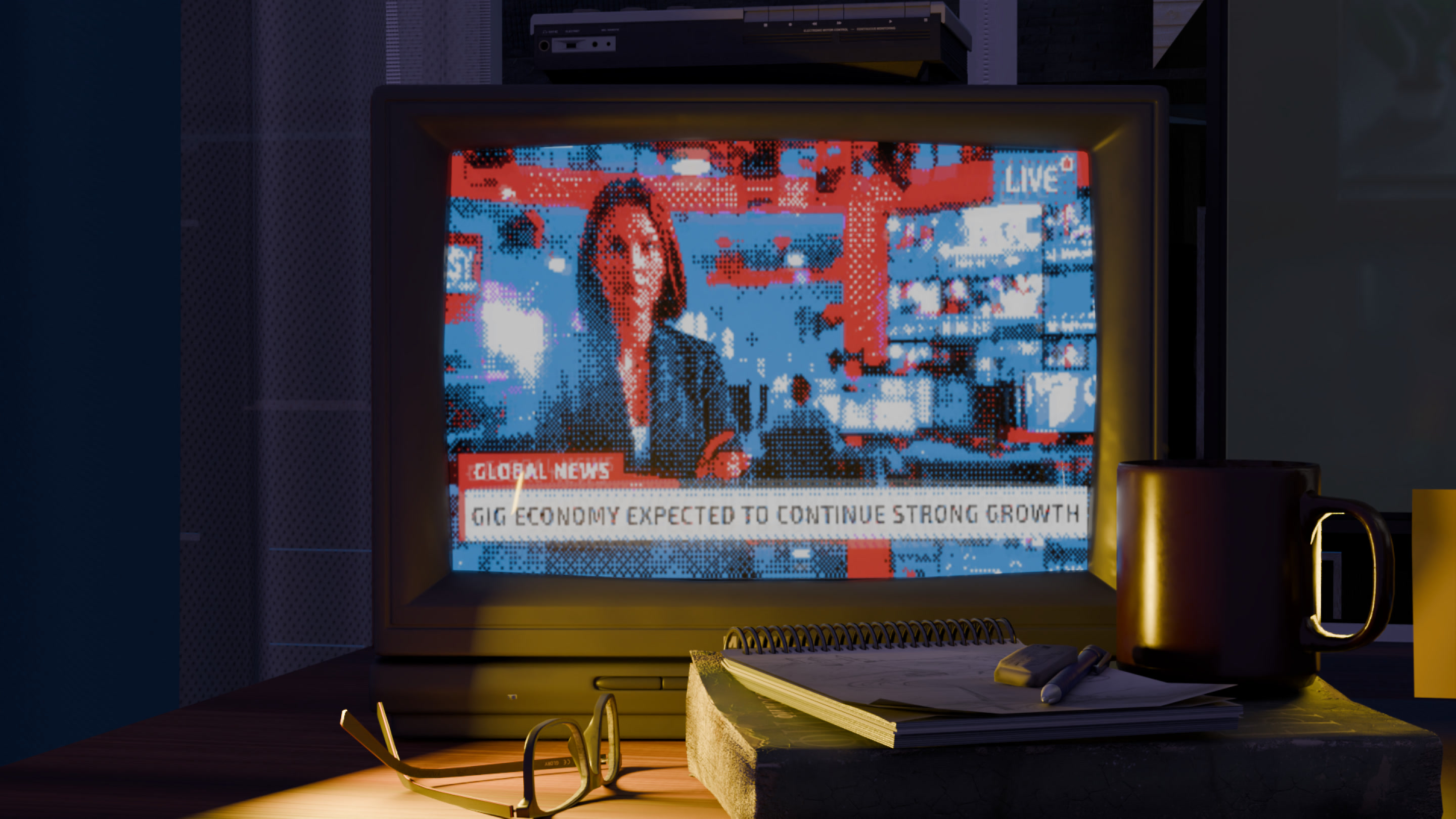
That world is a single apartment, designed around three surfaces. The computer is where the daily labeling work happens, sticky notes about rent due and bills crowding a monitor that promises "A Better World, One Click At A Time." The TV changes what it plays with every choice you make. And the window behind you can't be operated at all; it just quietly shifts as your decisions accumulate.
The game unfolds over many days of choices, and the room keeps score. That's the logic underneath: you, and the countless invisible labelers like you, feed the systems that shape the world, and the world drifts, like a butterfly effect, one label at a time. The scenes shown here are day one.
The generation pipeline
A game about training AI, with its own AI trained to build it.
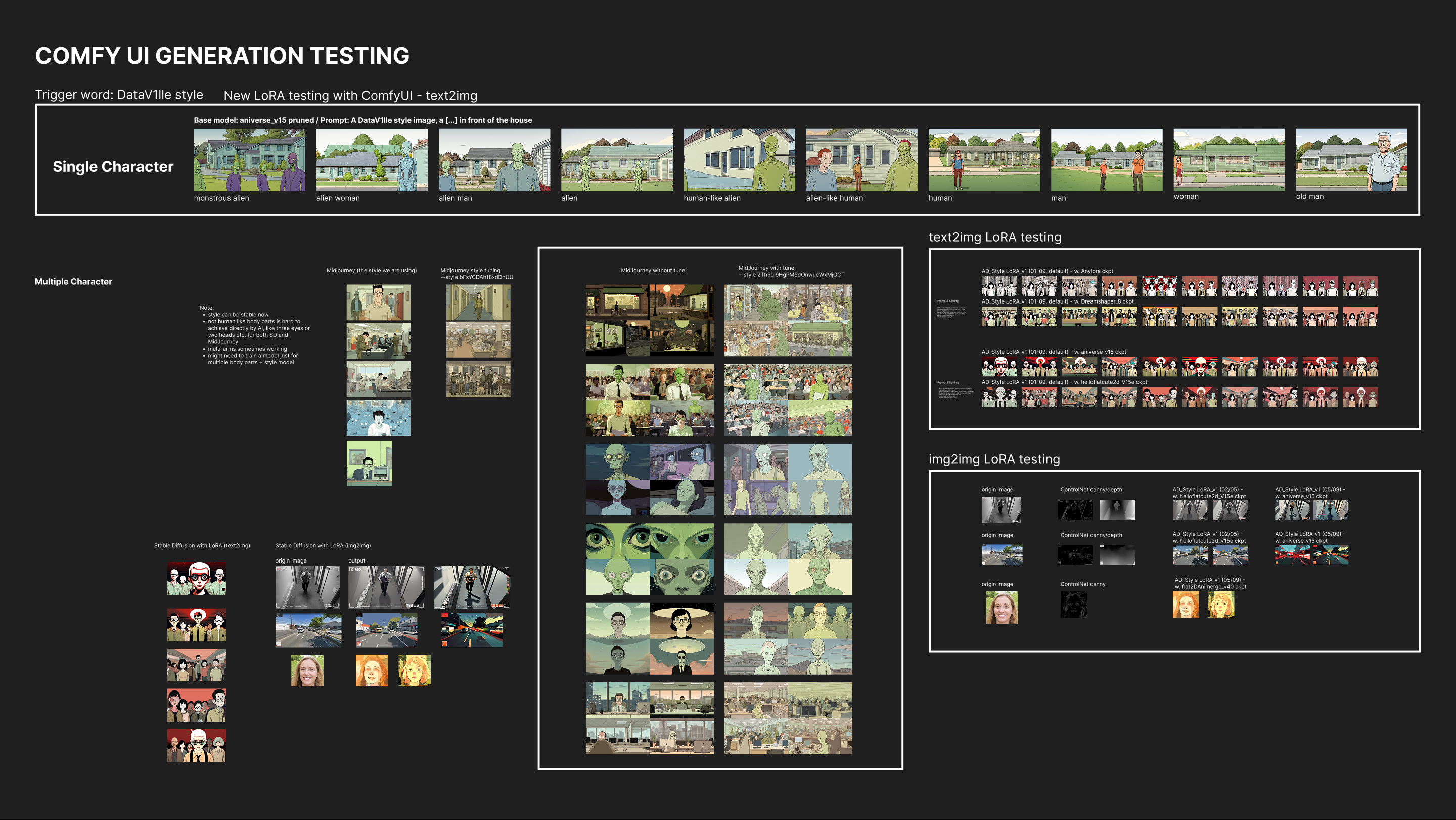
For the content the player labels on the in-game computer, I wanted imagery that belonged to the game's world rather than stock photos. So I designed and built my own generation pipeline in ComfyUI: open source Stable Diffusion combined with LoRA models I trained myself on the game's art style, with the trigger word "DataV1lle style."
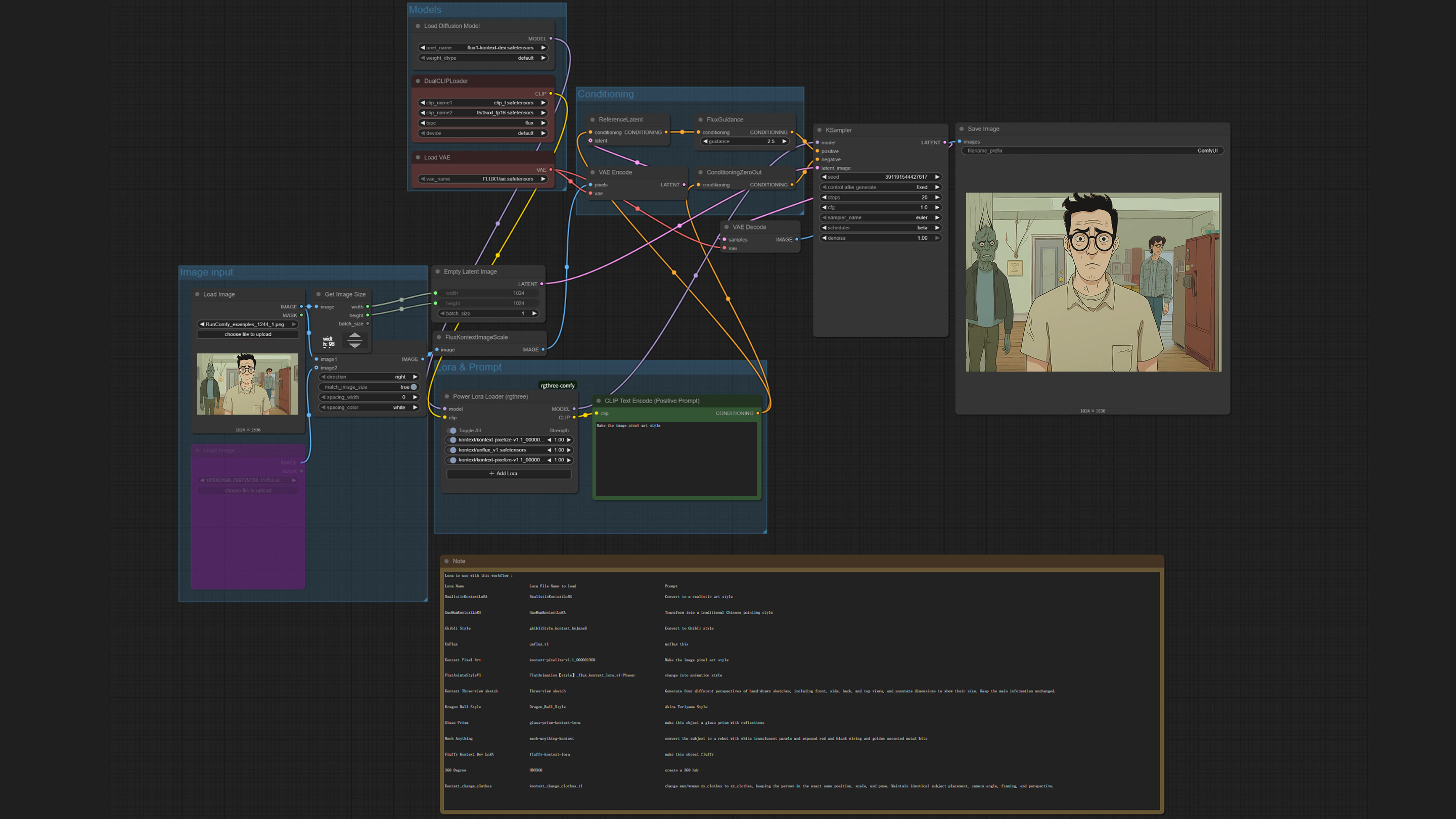
I tested the pipeline across single characters, aliens, crowds, and img2img conversions of real photographs, so every image the player judges stays in the art style I defined.