UX Design · Personal Project
Afterlane
An AI companion for car accident recovery
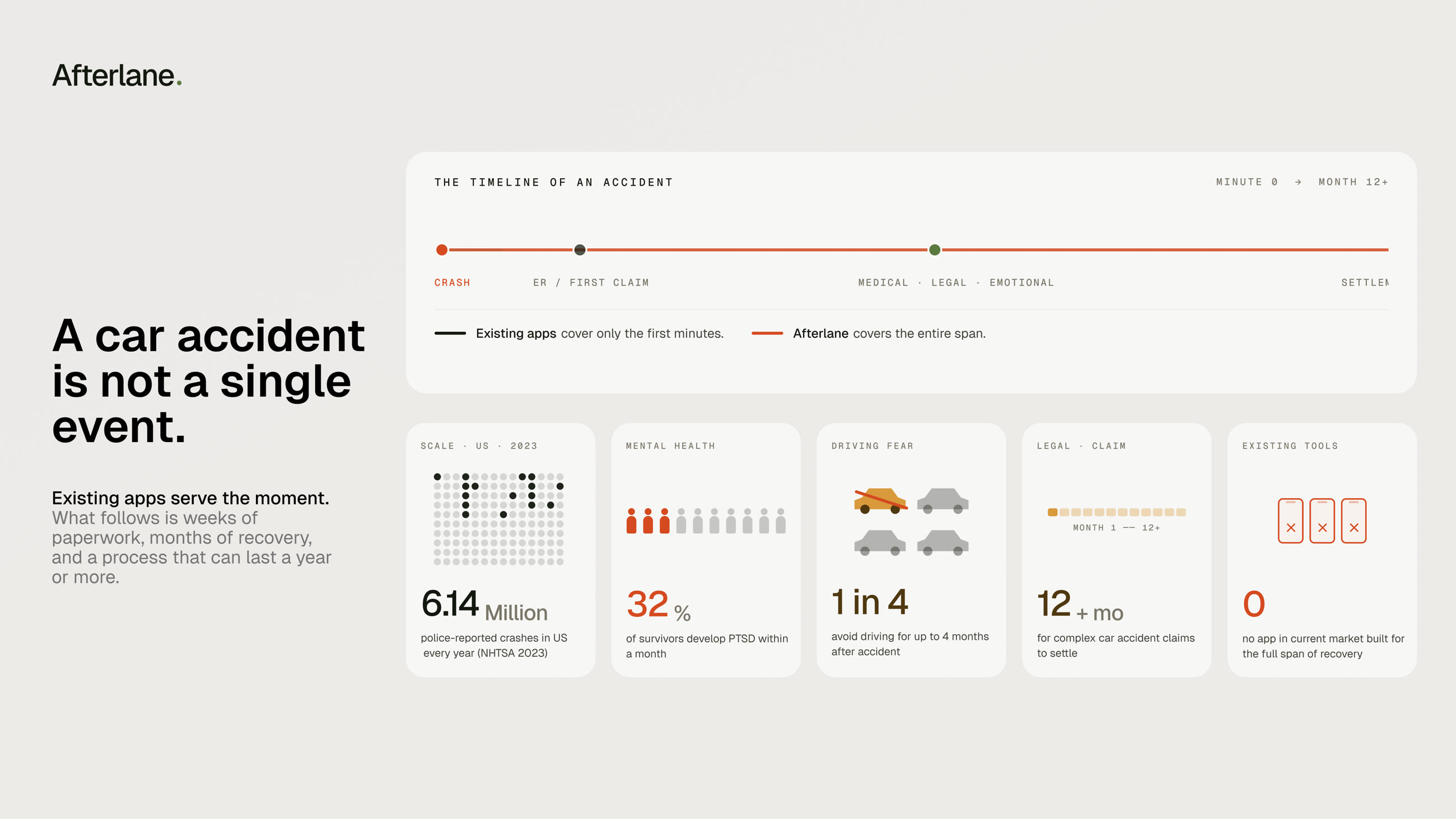
A car accident is not a single event. Existing apps serve the moment of impact; what follows is weeks of paperwork, months of recovery, and a process that can last a year or more. Afterlane arrives first and stays the longest.
- Timeline
- 2025 – 2026
- Tools
- Figma
- Role
- Solo Designer: Research, Product Definition, UX, UI, Copy
- Team
- Lifei Wang
- Skills
- Product Definition, UX Design, Visual System, UX Writing
Context
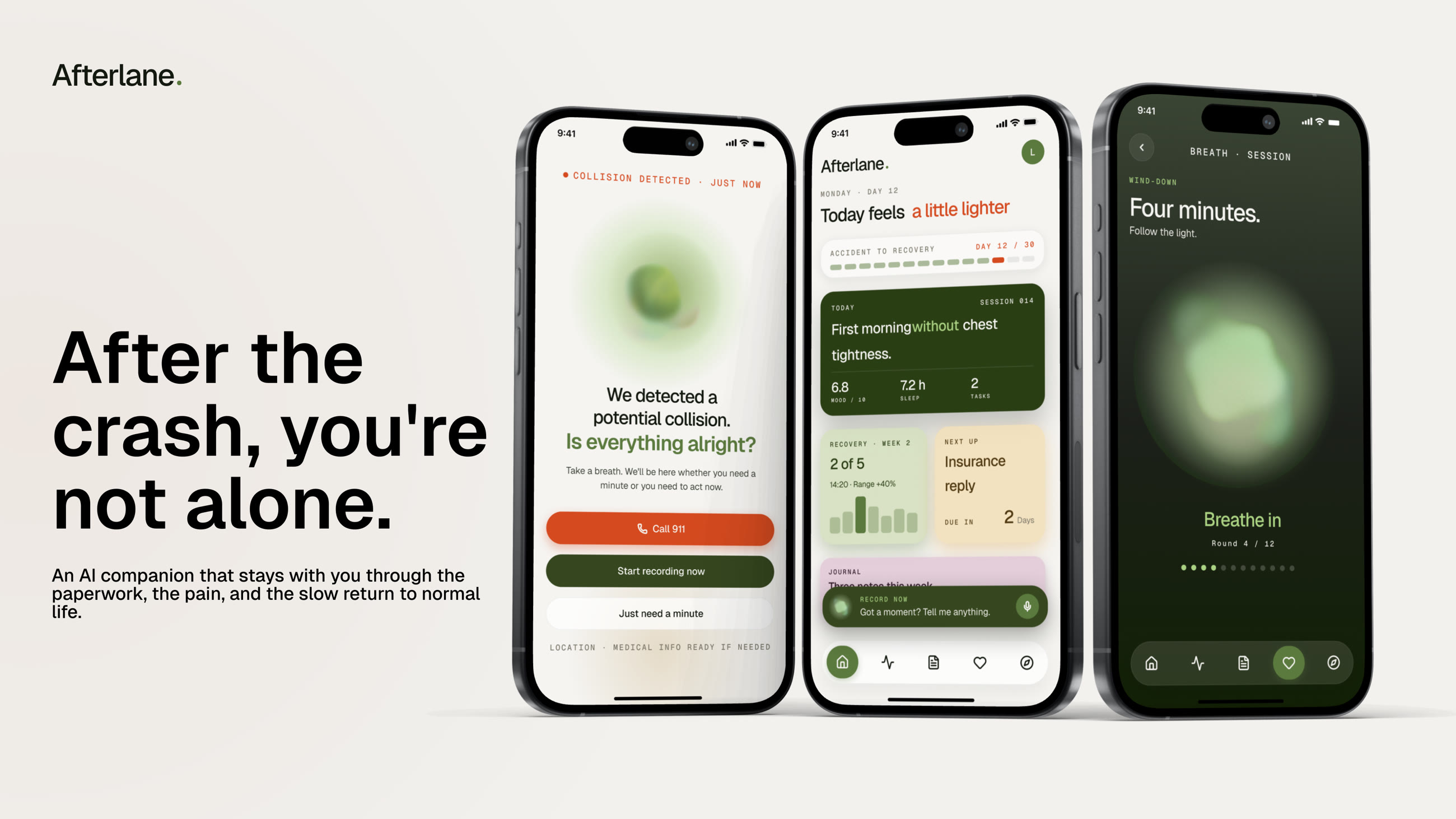
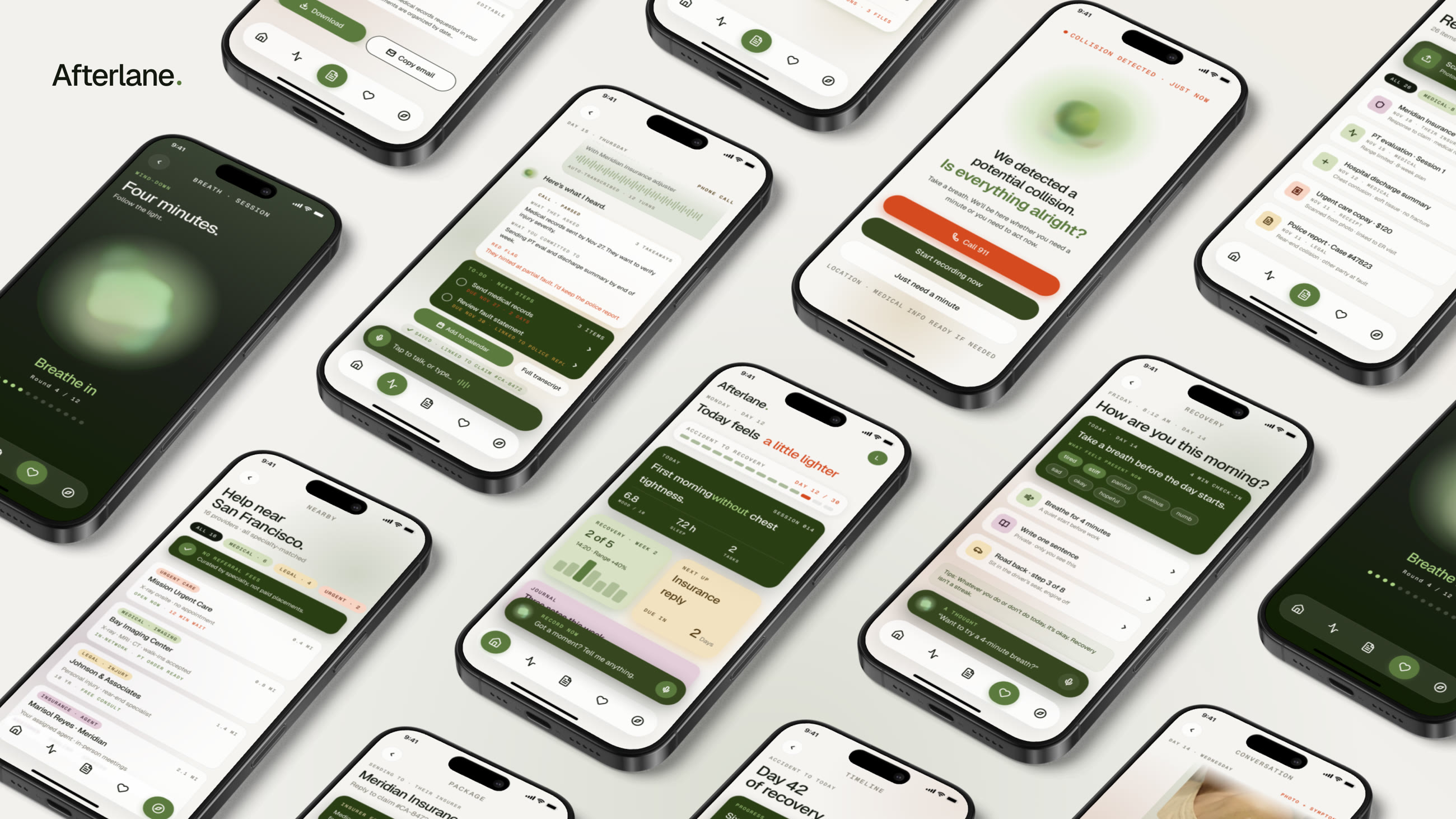
Afterlane is an AI companion app that starts at the moment of a car collision, through the phone's own crash detection, and stays with the person through everything after: documentation, insurance, and recovery. It comes from my own accident, a highway pileup where I stood on the shoulder unable to hear, unsure whether to board the ambulance, and then spent two months waiting to see my own scans while learning insurance paperwork from zero. The people I talked to afterward all had a version of the same story.
The problem
Every year the US sees 6.14 million police-reported car crashes. The crash takes seconds. The aftermath takes months.
After an accident, people can't process complex information or even organize their own words. Yet they have to retell the same story to insurers, doctors, lawyers, and family, each one wanting it in a different format.
Photos, reports, emails, and receipts scatter across places, and the injured person becomes the only thing holding them together, at exactly the moment they are least able to.
High-stakes questions arrive with no neutral party to interpret them. And the emotional side, from driving anxiety to intrusive replay, is treated by no product as part of the same journey. Nothing on the market covers the full span.
What Afterlane does
One companion, from minute zero to day 180.
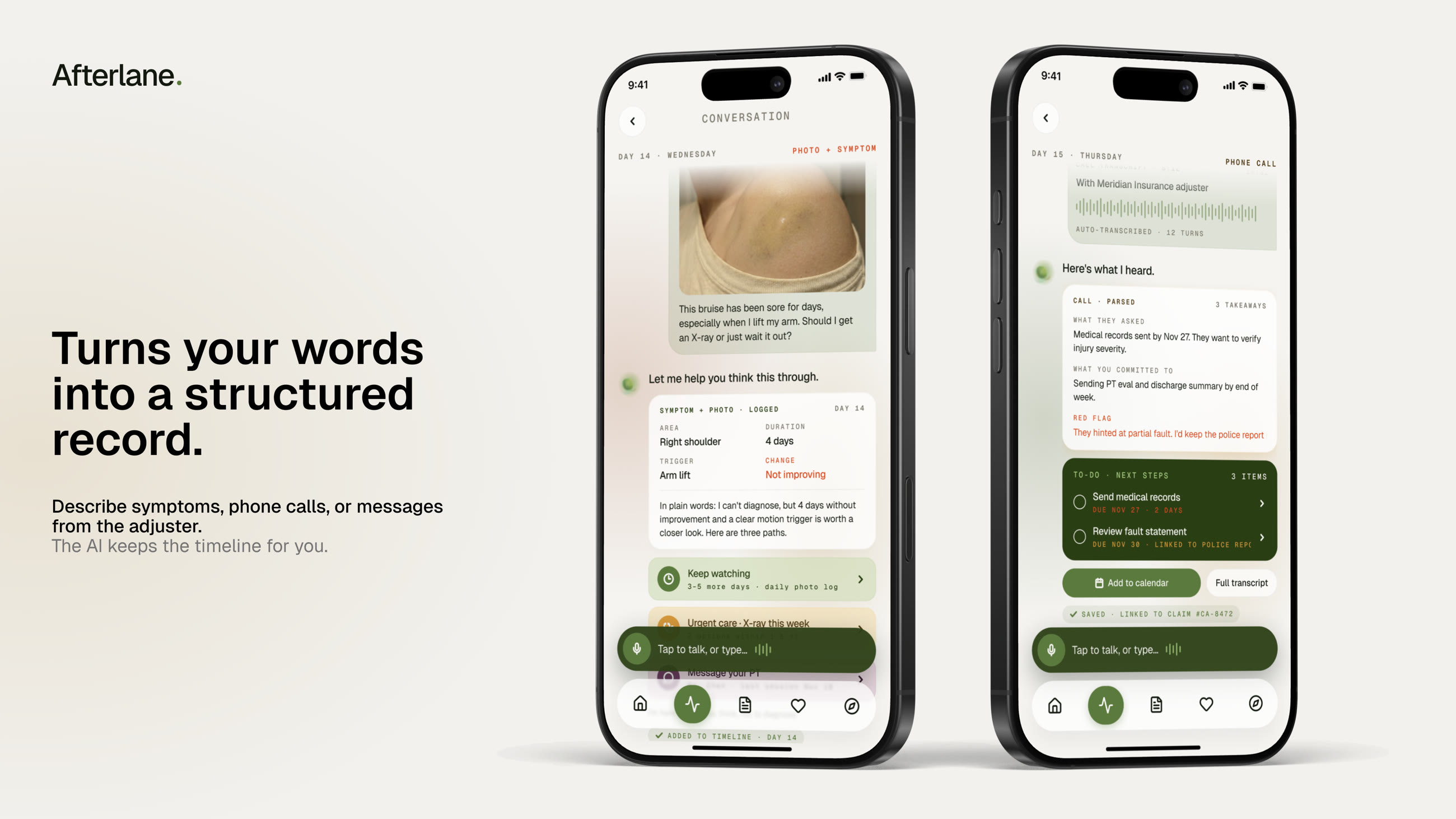
01. It listens, then organizes
The person describes a symptom, forwards an adjuster's message, or lets the app transcribe a call, all in natural language. The AI classifies silently, keeps the timeline, turns calls into takeaways and to-dos, and flags risks like a hint of partial fault in an insurer's wording. It explains and suggests questions; it never diagnoses and never gives legal advice.
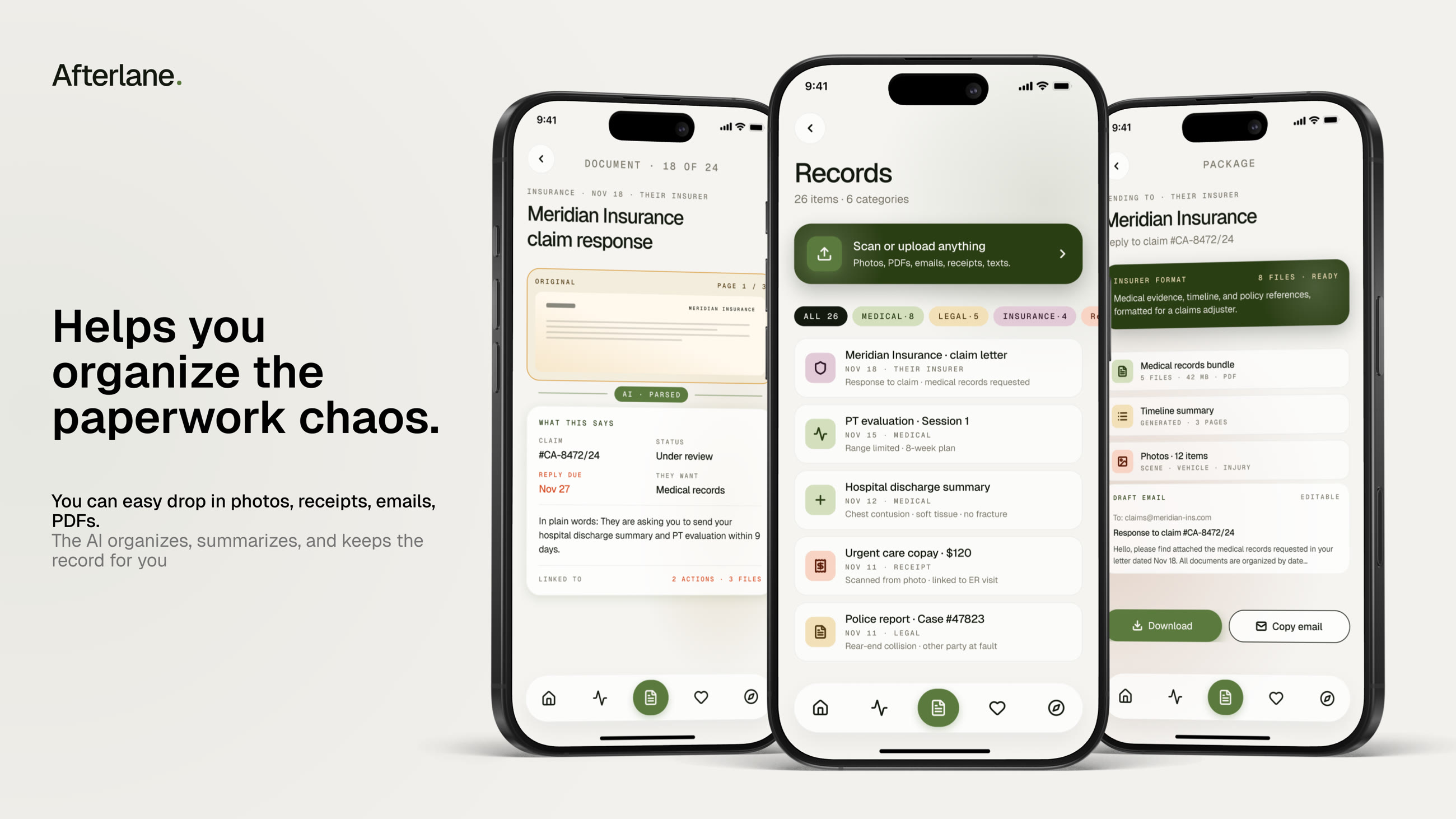
02. It carries the paperwork
Everything drops into one structured archive. The AI summarizes documents in plain words, and the Ready to Send flow packages the right subset for a lawyer, an insurer, or a doctor, so the person never has to retell the story from scratch again.
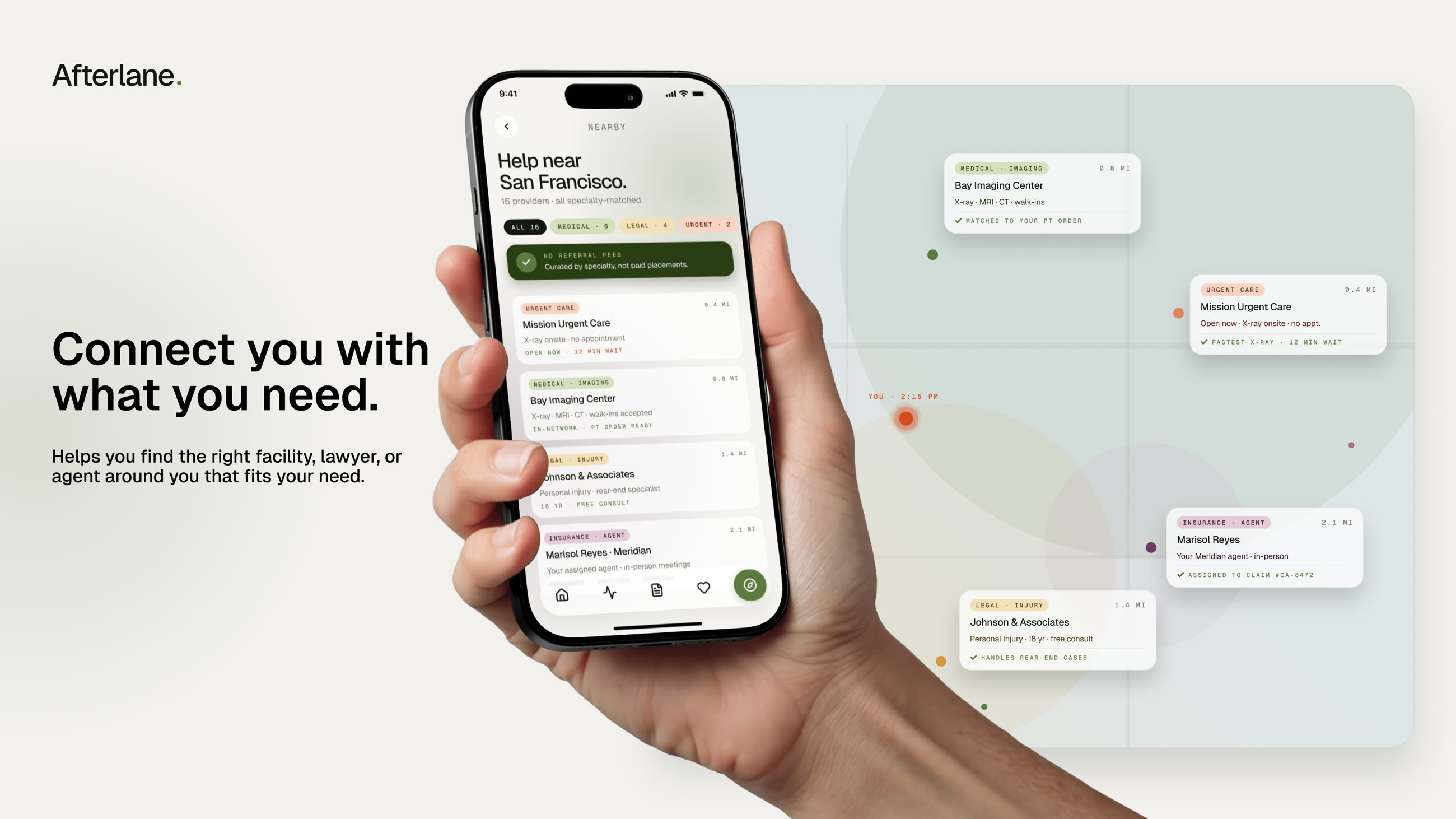
03. It finds the right help nearby
Imaging centers, urgent care, lawyers, and the assigned insurance agent, matched by specialty rather than paid placement. Afterlane's business model is B2B licensing, referral fees are rejected outright, and a persistent disclosure in the interface says exactly that.
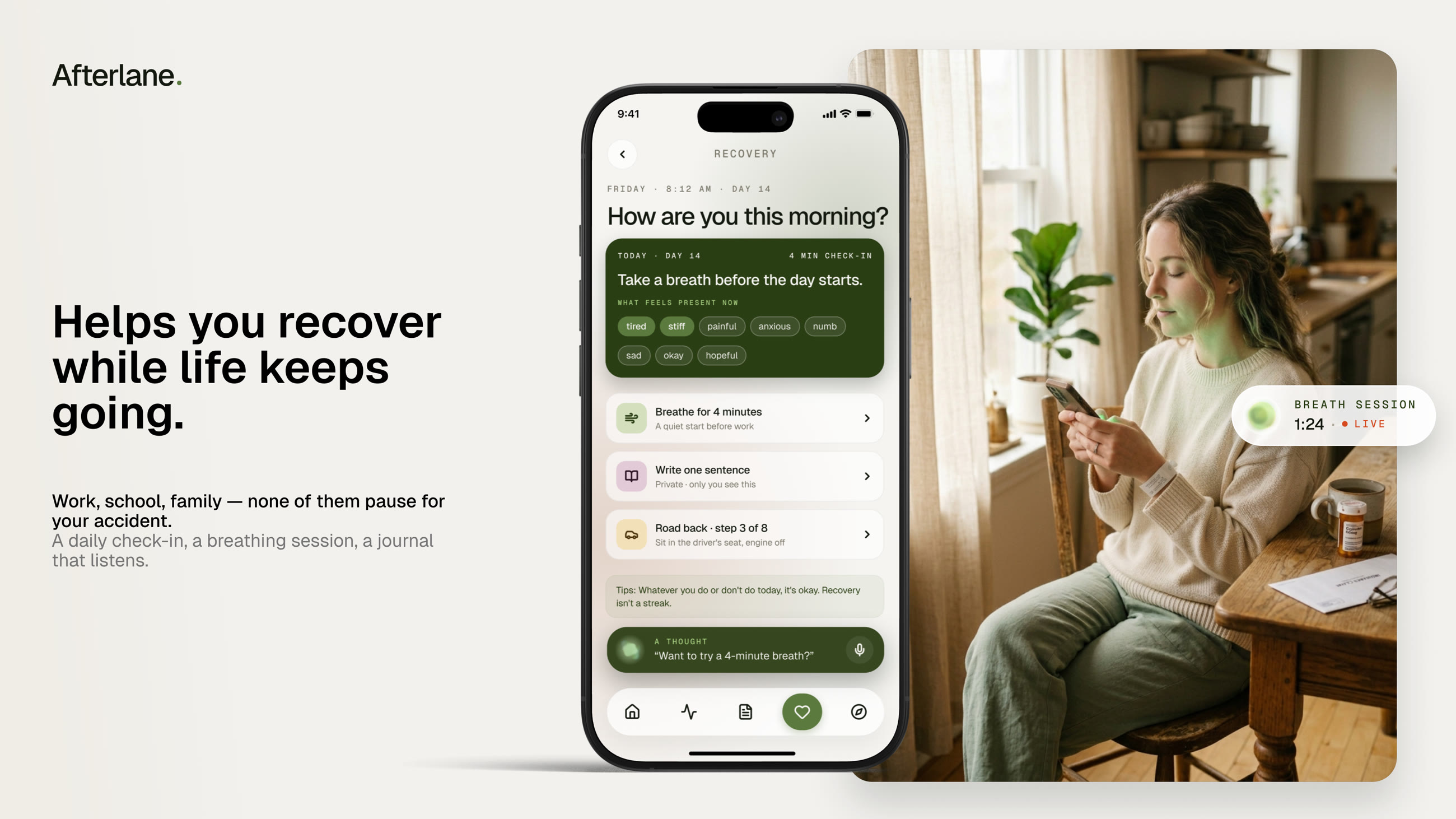
04. It helps recovery while life keeps going
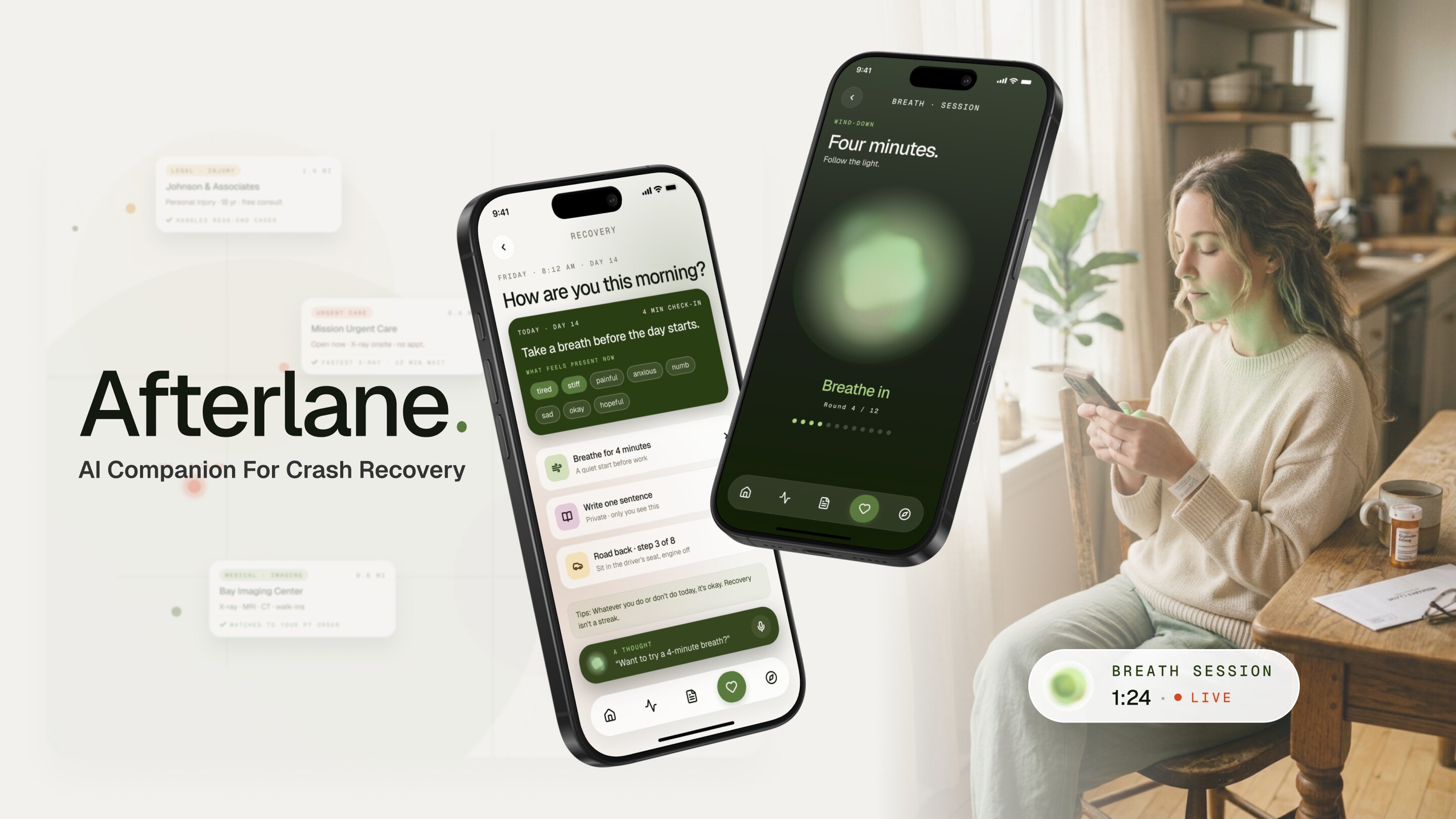
A daily check-in, a four minute breathing session, a journal that listens, and a gradual road-back plan for getting behind the wheel again. No streaks, no scores; a missed day is not a failure.
Design intentions
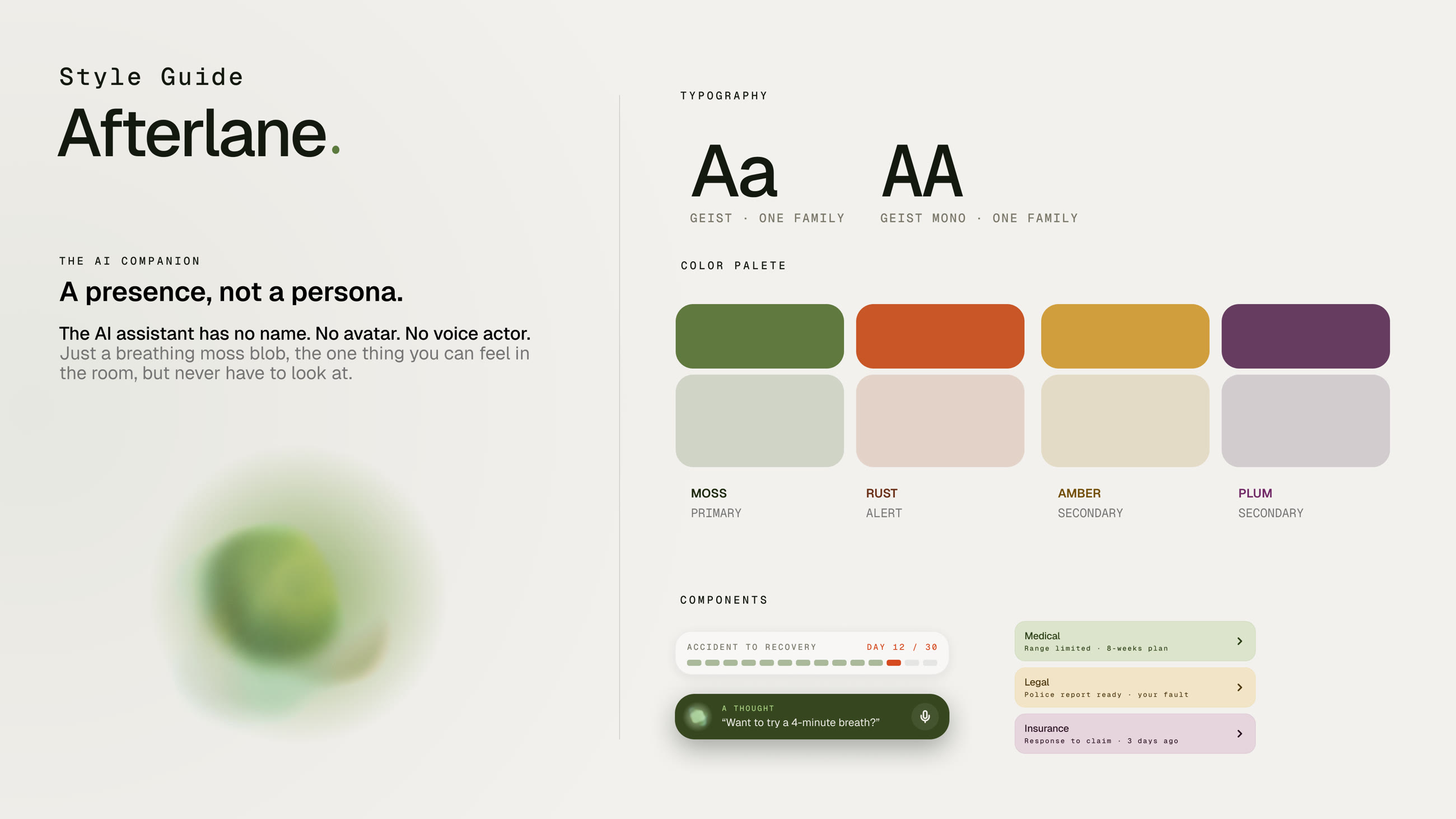
Every choice in the style guide answers the same question: what does a person in crisis need to see?
The interface is anchored by a breathing moss-green light. The green is deliberate: unlike red or orange, it reads as calm to a nervous system that has just had the worst day of its year. The rest of the system follows the same restraint: a muted palette, plain short sentences instead of clinical or marketing language, and one primary action per screen in crisis moments.
Reflection
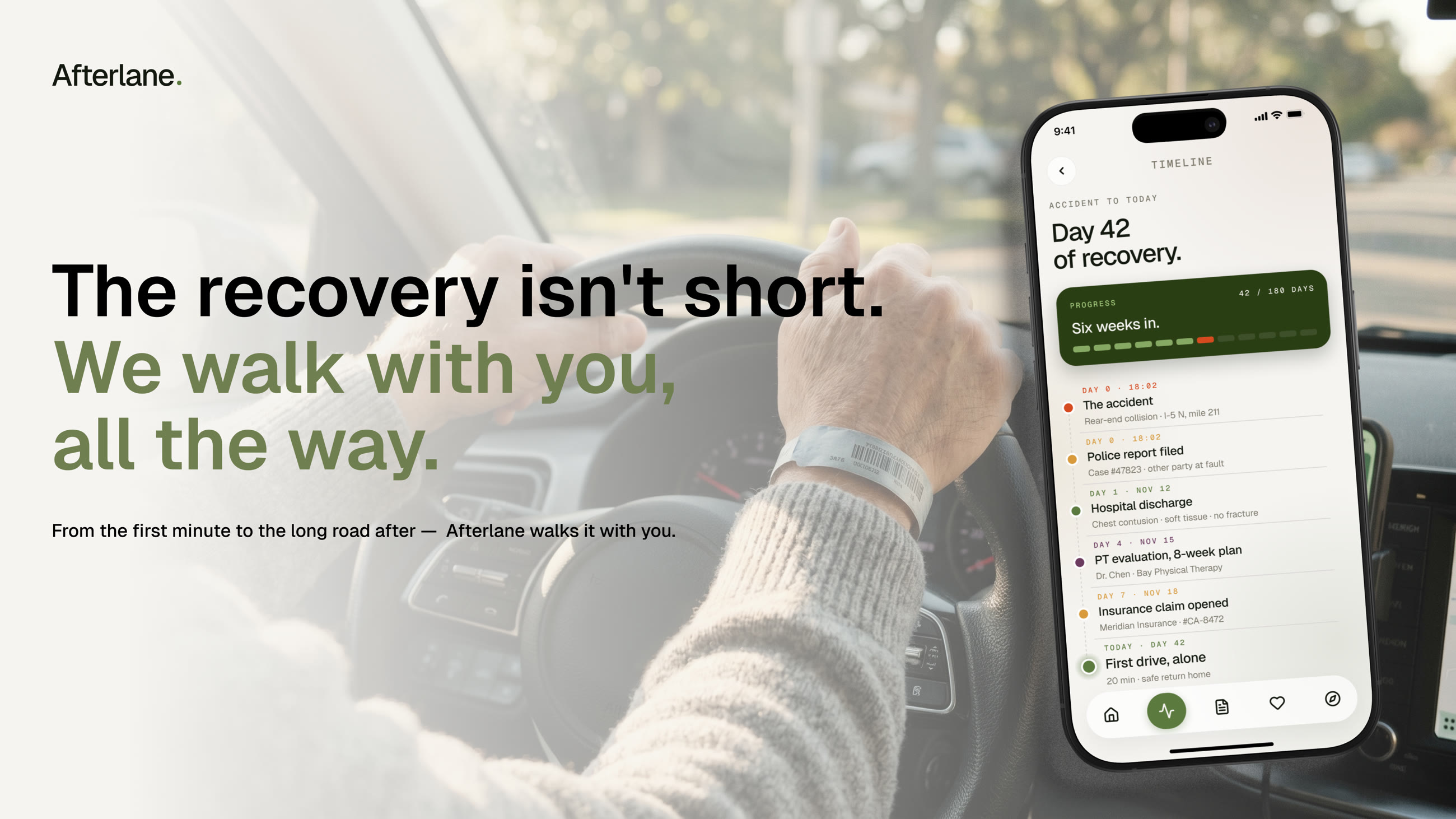
The recovery isn't short. From the first minute to the long road after, Afterlane walks it with you.